You’re not logged in!
Please login to make use of this section.

Theme
Version — Latest
July 20, 2026
License Key (Lifetime)
Our First Download of Bricks Builder on WordPress I still remember the first time I downloaded and opened Bricks Builder on a client project. I was tired of fighting with bloated builders that added ten extra plugins just to do simple things, and someone in a Facebook group kept mentioning this "Bricks" thing like it…

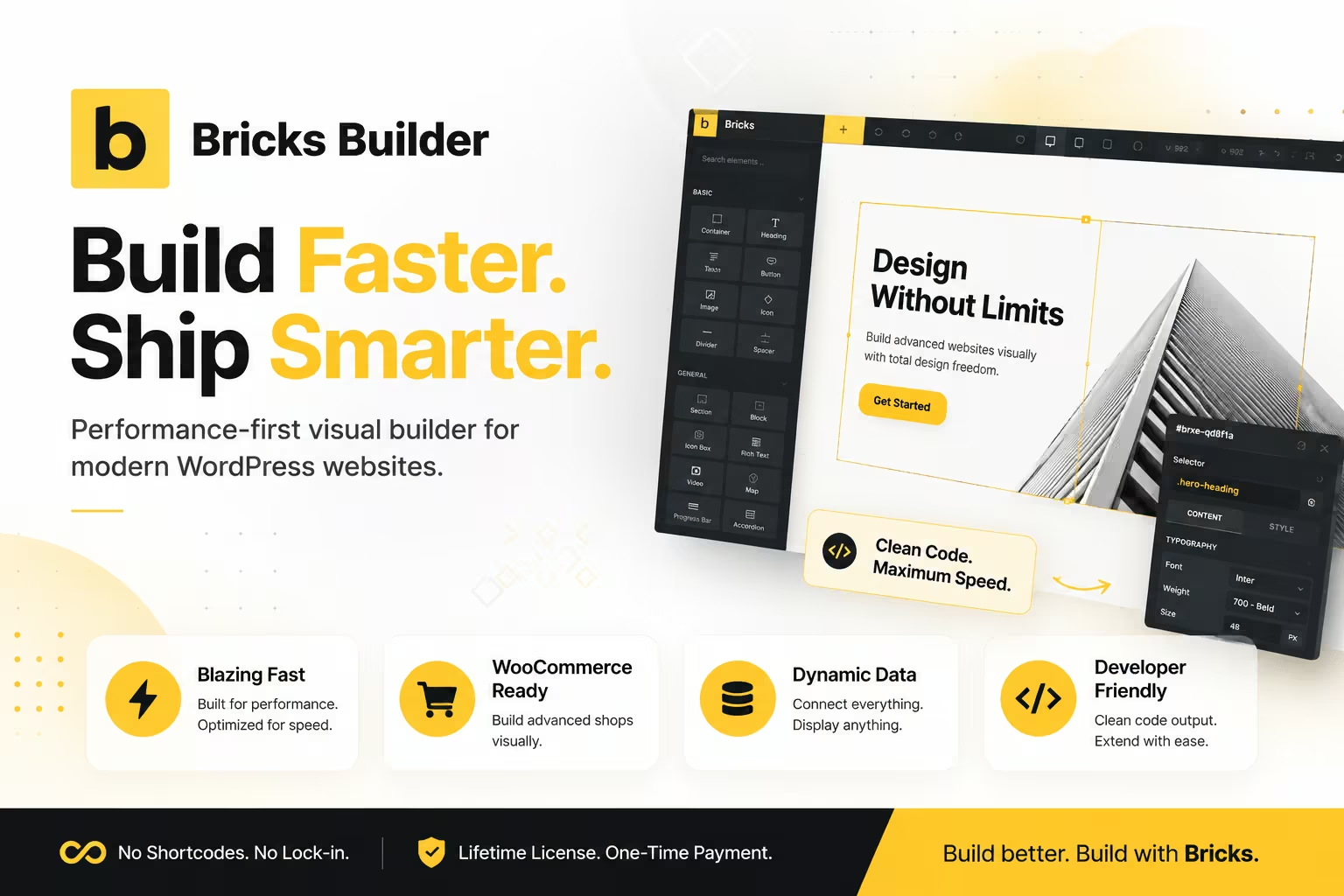
I still remember the first time I downloaded and opened Bricks Builder on a client project. I was tired of fighting with bloated builders that added ten extra plugins just to do simple things, and someone in a Facebook group kept mentioning this “Bricks” thing like it was some kind of secret. So I tried it. And honestly, I did not switch back after that.
But this is not really about me. It’s about how a small, self-funded page builder from a one-man idea turned into one of the most respected tools in the WordPress space, and why developers keep sticking with it even when the competition throws money and marketing at the problem.
Bricks was not built by a big company with investors breathing down anyone’s neck. It came from Thomas Ehrig, a self-taught developer from Germany who had been messing around with WordPress since around 2008. Before Bricks, he built a portfolio theme called Worx, then a media library plugin called HappyFiles in 2020. Both did fine, but neither one was the big swing.
That came in March 2021, when Bricks 1.0 launched. Ehrig has said in interviews that he originally thought about building something on top of Elementor, but changed his mind and decided to build his own thing from scratch instead. He teamed up with Luis Godinho and kept the company small and bootstrapped, no outside funding, no freemium trap. Just a lifetime license model, something like 59 dollars at launch for one site, and a promise to keep building in public.
That last part matters more than people give it credit for. A lot of WordPress plugin companies talk about “community-driven development” as a marketing line. Bricks actually published its roadmap and changelog openly from day one, and a good chunk of features you see in the builder today came directly from user requests in their Facebook group and forums.
Here is the thing people don’t always say out loud when they review Bricks. It was never going to be the easy choice. Elementor already owned the market. Divi had years of brand loyalty behind it. And Bricks decided to go the opposite direction of both, leaning hard into clean code, CSS control, and a workflow that expects you to actually understand how websites are built.
That is a real barrier. If you are not comfortable with flexbox, grid, or basic CSS logic, Bricks can feel intimidating in the first week. There is no free version to test the waters with either, which cuts off a chunk of hobbyist users who would normally try a tool before committing. For an agency or a freelance developer, none of that is a dealbreaker. But it did slow down how fast Bricks could grow compared to builders that let anyone with zero coding background drag a few blocks around and call it a day.
The other challenge, and I think this one is bigger than people admit, is that being small and independent means you don’t have the marketing budget of Elementor. Growth for Bricks has mostly happened through word of mouth, YouTube tutorials, and developers telling other developers. Slow, but it built a loyal base instead of a big but shallow one.
Fast forward to this year and Bricks has quietly become one of the tools other builders are trying to copy. Look at where the whole page builder industry is heading right now: everyone is chasing cleaner code output, reusable classes, and more developer-level control. Elementor’s own team has openly called their newest editor a shift toward a CSS-first approach. That is basically the philosophy Bricks had from year one.
Bricks 2.2 brought in a real design system upgrade, with a unified Style Manager and component features like Slots and Style Variants, letting you build once and reuse everywhere without breaking consistency across a site. Then version 2.3 quietly fixed a bunch of pain points around license validation and multilingual setups that agencies working with Polylang or WPML had been asking for.
The bigger jump came with version 2.4. This one leans into automation in a way Bricks has not done before. It introduced what the team calls AI Abilities, basically letting AI coding tools like Claude Code, Cursor, or Copilot create and edit Bricks content directly through MCP connections. There is also a new Builder Browser, which works as a central place to manage pages, templates, components, and custom post types without jumping around the dashboard. On top of that, WooCommerce got new v2 elements for a smoother setup, and the sync between Custom CSS and the visual style controls now works both ways instead of one being an afterthought.
For someone building client sites daily, these are not flashy features for a demo video. They are the kind of thing that quietly saves an hour here, thirty minutes there, across every project.
If any of this sounds like the workflow you have been missing, you don’t have to go hunting for it. We keep our own copy in the repository, including the latest release we just pushed, so you can pull it down and get building without digging through changelogs to figure out which version has what.
Bricks was never trying to be everything for everyone. It picked a lane: developers and agencies who care about performance and control, and it stayed in that lane for five years while other builders chased mass adoption. That focus is probably the real reason it survived long enough to start shaping what the rest of the industry is copying now.
It is not the builder for someone who wants to drag a button onto a page and never think about CSS again. But if you are the kind of person who wants a tool that respects your time and gets out of your way once you know it, Bricks earned its spot the hard way, one changelog at a time.
PressXO was created to make premium WordPress tools easier to access, especially for developers, freelancers, and everyday users who keep hitting expensive paywalls. We know how hard it is to find the right plugin or theme without spending too much or risking sketchy sites. That’s why we built this platform: to share clean, useful WordPress resources under the GPL, the way it was meant to be.
We take authenticity seriously. Every resource on PressXO is sourced from the original developer, untouched, unmodified, and safe to use. We scan files before uploading, and we don’t add malware, ads, or shady scripts. You download exactly what we’ve downloaded.
If you’re here to get Download Bricks Builder Theme (License Include), know that it’s not just a random file. It’s part of a trusted collection, sourced & uploaded from the developer directly for you to build better without spending much or risking their site’s safety.
You have a feedback to share or a version request for Download Bricks Builder Theme (License Include)? Use the form below.
Please login to make use of this section.
Original price was: €30.€20Current price is: €20.